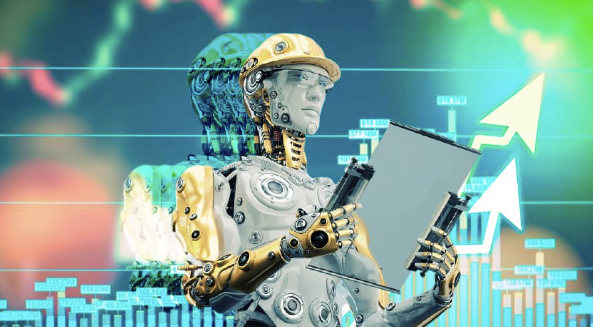
Artificial Intelligence is reshaping global industries by streamlining operations and enhancing customer interactions. In healthcare, AI aids in diagnostics, while retail sectors utilize it for personalized shopping experiences. Financial services are increasingly adopting intelligent automation for efficiency. However, the rapid integration of AI also brings forth ethical dilemmas that demand scrutiny. The balancing act between technological advancement and ethical responsibility will define the future landscape of these industries. What challenges will arise as this evolution continues?
Transforming Healthcare With AI Innovations
As healthcare systems around the world face mounting pressures from rising costs and increasing patient demands, artificial intelligence (AI) emerges as a transformative force poised to redefine patient care and operational efficiency.
AI diagnostics facilitate accurate disease detection, while predictive analytics empower healthcare providers to anticipate patient needs, optimize resources, and enhance treatment outcomes.
This integration signals a shift toward more personalized and efficient healthcare solutions.
See also: 3gagnantspmu
Enhancing Customer Experience in Retail Through AI
How can artificial intelligence reshape the retail landscape to enhance customer experience?
By leveraging customer insights, AI enables retailers to implement personalized marketing strategies, tailoring promotions and recommendations to individual preferences.
This targeted approach not only improves customer satisfaction but also fosters loyalty, as consumers feel understood and valued.
Ultimately, AI transforms retail interactions, making them more relevant and engaging for the modern shopper.
Revolutionizing Financial Services With Intelligent Automation
The retail sector’s embrace of artificial intelligence to enhance customer experiences sets a precedent for other industries, particularly financial services, which stand to benefit significantly from intelligent automation.
By leveraging predictive analytics, financial institutions can optimize decision-making processes, improve customer insights, and enhance operational efficiency.
Additionally, intelligent automation facilitates advanced fraud detection, safeguarding assets and fostering trust in an increasingly digital financial landscape.
Addressing Ethical Concerns in AI Integration
Ethical considerations surrounding the integration of artificial intelligence in various industries have emerged as a critical focal point in contemporary discourse.
Addressing these concerns requires robust bias mitigation strategies and the implementation of accountability frameworks.
Conclusion
In conclusion, the integration of artificial intelligence across global industries is reshaping operational landscapes and consumer interactions. A noteworthy statistic reveals that 80% of healthcare executives believe AI will significantly enhance patient outcomes within the next five years. However, as the technology advances, the imperative to address ethical concerns—such as bias and transparency—remains critical. The continued evolution of AI promises not only operational efficiencies but also a paradigm shift in industry standards and practices.